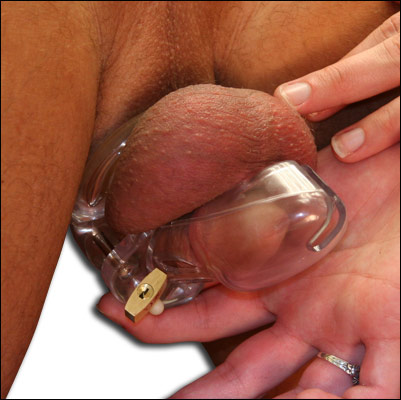
Understanding and Using Inverted Male Chastity Cages: The Complete Guide
Everything You Need to Know About Inverted Chastity Devices, Micro Cages, Feminization, Proper Fit, Safety, and Long-Term Chastity
Male chastity devices have evolved dramatically over the years. What began primarily as a category of restrictive belts and conventional penis cages has expanded into a specialized market featuring micro cages, flat-front devices, concealed designs, and one particularly unusual category: inverted male chastity cages.
Unlike traditional chastity cages, which accommodate the penis in a forward-facing enclosure, inverted chastity cages are designed to reduce or conceal the outward penile profile. Some feature a recessed internal chamber, while others use a very shallow or nearly flat front.
These devices have attracted interest from people who enjoy male chastity, consensual power exchange, small-bulge aesthetics, gender-neutral presentation, and feminization.
For some users, the appeal is the appearance of having little or no visible penile bulge. Others enjoy the psychological symbolism of chastity or the feeling of relinquishing control within an agreed-upon relationship.
Inverted cages are also marketed toward some sissies, feminine men, crossdressers, and transfeminine individuals who prefer a flatter genital silhouette beneath clothing.
However, their unusual construction introduces important fitting and safety considerations. A device that reduces visible projection may also concentrate pressure on sensitive tissue, and not every anatomy is compatible with an inverted design.
This cornerstone guide explores how inverted male chastity cages work, the different styles available, how they compare with traditional cages, what to consider before choosing one, and how to approach chastity safely.
What Is an Inverted Male Chastity Cage?
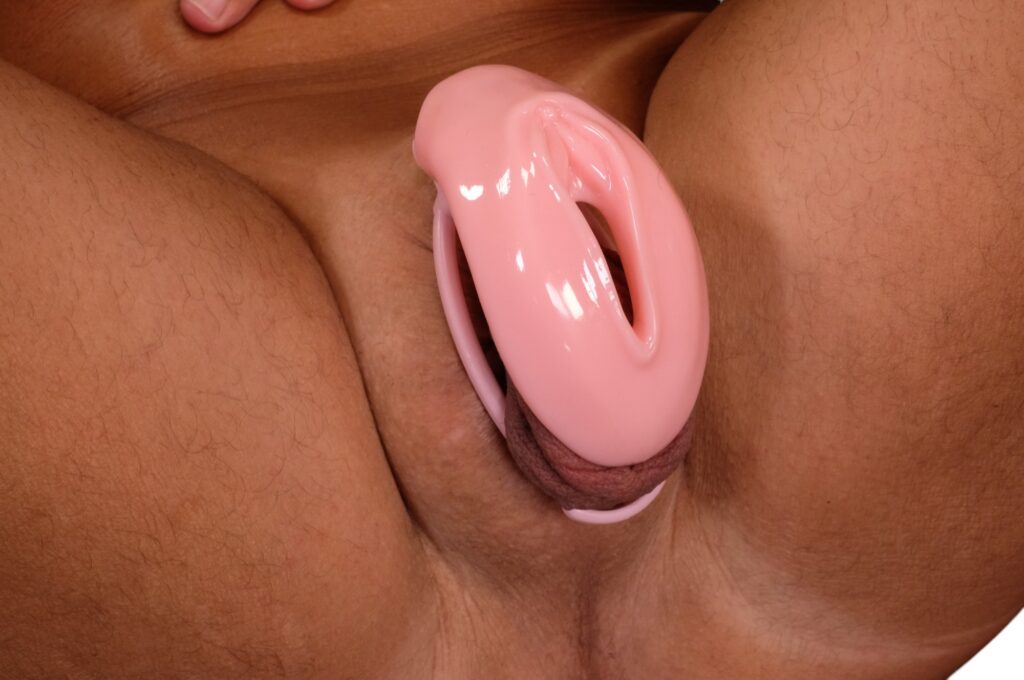
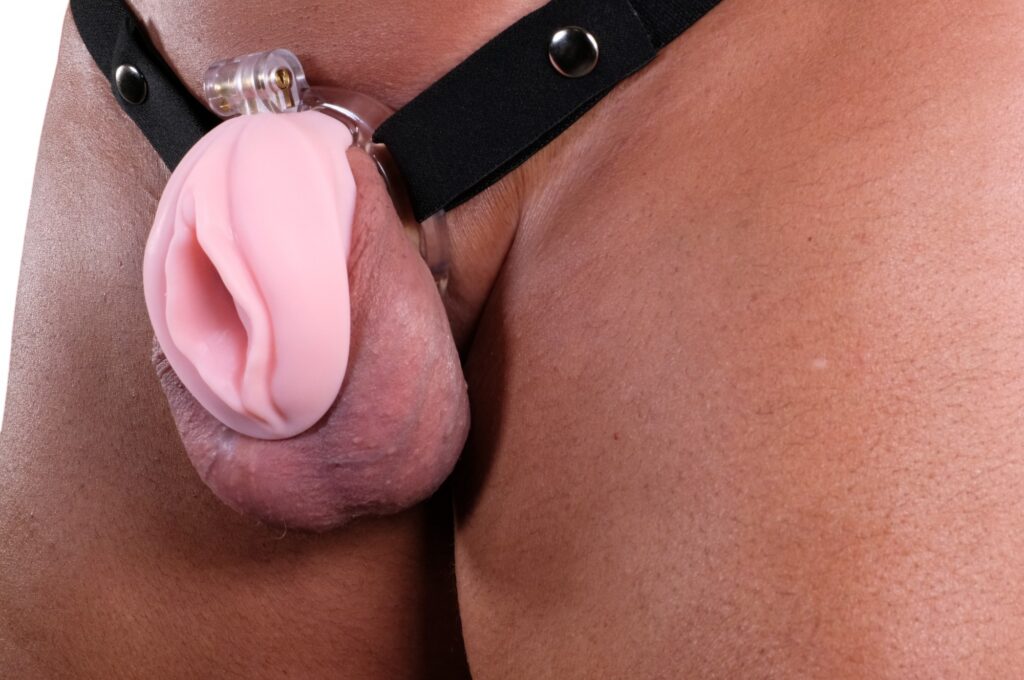
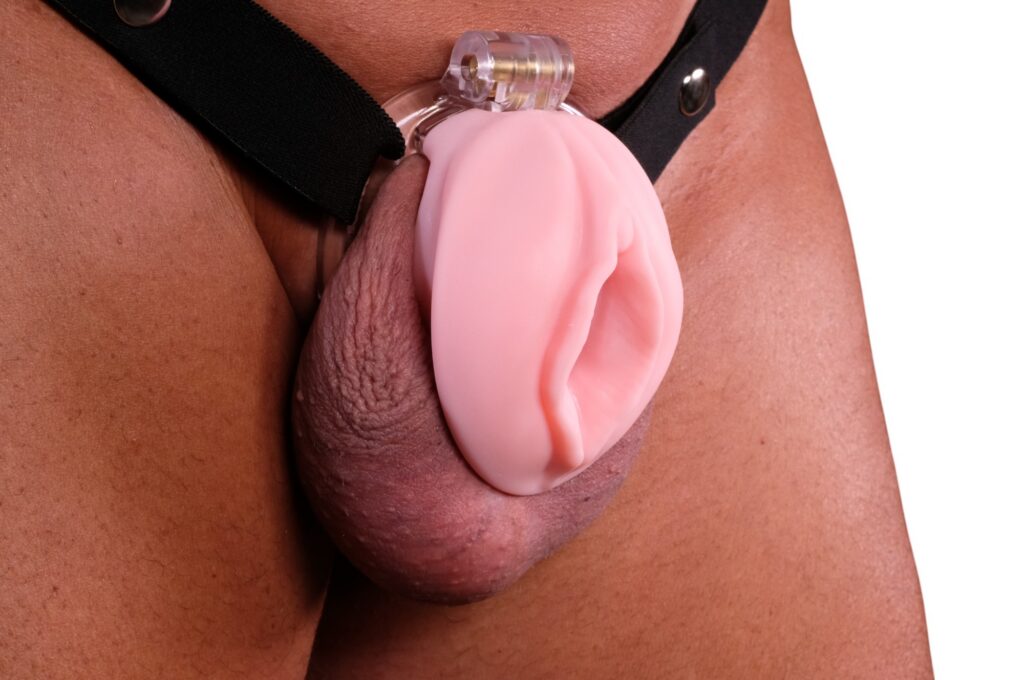
An inverted male chastity cage is a genital restraint device designed to minimize the outward projection of the penis.
Traditional cages generally provide a forward-facing enclosure that surrounds the penile shaft.
Inverted cages use a different construction.
Depending on the design, they may feature a recessed chamber, a shallow front housing, or a compact enclosure that encourages a less projecting appearance.
The objective is to create a much smaller visible genital profile.
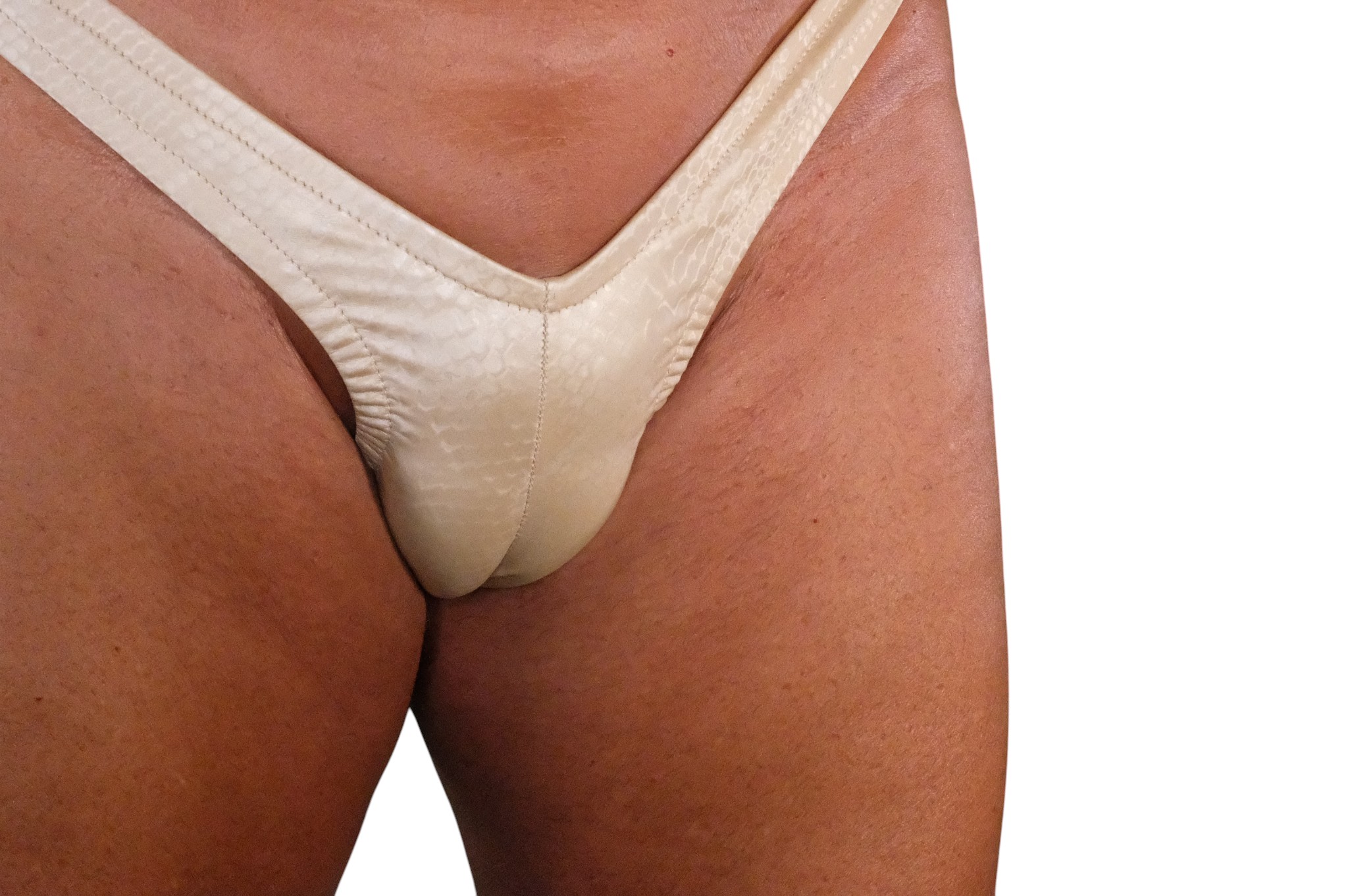
Some designs are marketed as producing a nearly flat front beneath clothing.
Others are intended to create the appearance of a very small penis.
The word inverted describes the construction and visual effect of the device. It does not mean the penis is surgically or permanently inverted.
How Is an Inverted Cage Different From a Conventional Cage?
The main difference is the shape of the enclosure.
| Feature | Traditional chastity cage | Inverted chastity cage |
|---|---|---|
| Overall shape | Forward-projecting enclosure | Recessed, shallow, or reduced-projection enclosure |
| Visual profile | Usually recognizable penile bulge | Often smaller or flatter |
| Main aesthetic | Conventional chastity appearance | Minimal-bulge or concealed appearance |
| Fit considerations | Shaft length, diameter, base-ring fit | All conventional considerations plus recessed pressure and tissue positioning |
| Comfort | Depends on anatomy and construction | May be more challenging because of concentrated pressure |
| Feminization appeal | Varies | Often marketed toward flat-front or feminine presentation |
| Suitability for extended wear | Requires caution and monitoring | Particularly uncertain without individualized assessment |
Both categories can create problems when improperly fitted.
Inverted designs should not be assumed to be safer simply because they are smaller.
Why Are Inverted Male Chastity Cages Appealing?
People become interested in inverted chastity for different reasons.
Some are experienced chastity users seeking a different aesthetic.
Others are attracted to the idea of reducing their visible genital bulge.
Still others associate inverted cages with consensual submission or feminization.
1. The Appeal of an Extremely Small Bulge
Conventional men’s underwear often emphasizes or accommodates a noticeable penile outline.
Some people prefer the opposite appearance.
They want a compact, discreet front that attracts little attention beneath clothing.
Inverted cages are marketed specifically around this reduced-projection aesthetic.
For individuals interested in micro-bulge underwear or swimwear, the visual concept may be particularly appealing.
2. The Psychology of Chastity
Some adults enjoy chastity as part of consensual erotic restraint or power exchange.
For these individuals, the device may symbolize an agreement with a partner.
Others enjoy wearing chastity devices privately without involving another person.
The psychological experience varies.
Some associate chastity with self-discipline, anticipation, submission, or relationship intimacy.
There is no single motivation shared by every wearer.
3. Feminization and Gender Expression
Some feminine men, crossdressers, sissies, and transfeminine people prefer a flatter genital appearance.
An inverted cage may seem attractive because it is designed to minimize projection.
However, a chastity cage is not the same as a tucking garment or gender-affirming underwear.
It is a restrictive device, and the potential risks may outweigh any cosmetic benefit.
For people whose primary goal is a smooth silhouette, properly fitted flat-front underwear or specialized tucking garments may be more practical.
4. Consensual Partner-Controlled Chastity
Some couples enjoy a relationship dynamic in which one partner holds the key or participates in agreed-upon chastity arrangements.
An inverted cage may be chosen for its unusual appearance or symbolism.
Participation must remain voluntary, and the wearer must always have a reliable way to remove the device promptly.
A keyholder should never prevent removal when pain, swelling, circulation problems, or another health concern occurs.
Understanding the Different Types of Inverted Chastity Cages
Not every device marketed as an inverted cage has the same construction.
Manufacturers may use terms such as inverted, micro, recessed, flat-front, or concealed inconsistently.
Understanding these differences is important before evaluating a product.
1. Recessed-Chamber Inverted Cages
These devices feature a housing with an inward or recessed area rather than a conventional projecting tube.
Their design is intended to create a compact outward profile.
Because the shape may direct pressure toward sensitive genital structures, the internal geometry is especially important.
Sharp transitions, narrow openings, and rigid pressure points can increase injury risk.
2. Flat-Front Chastity Cages
Flat-front designs aim to create a minimal outward bulge.
Some resemble a compact shield or shallow enclosure.
The appearance may appeal to people interested in gender-neutral or feminine clothing.
However, a flatter front does not automatically mean less compression.
3. Micro Chastity Cages
Micro cages use a very short enclosure.
They are not necessarily inverted, although some manufacturers combine the two concepts.
A micro cage may still project outward, while an inverted design attempts to reduce that projection.
Micro and inverted are related product categories, but they are not interchangeable terms.
4. Inverted Micro Cages
These combine a very compact enclosure with a recessed or reduced-projection design.
They are among the more restrictive styles.
A particularly small device should never be selected simply to force the genital tissue into a smaller space.
The correct fit must accommodate normal anatomical changes without causing injury.
5. Open-Frame and Ventilated Designs
Some cages incorporate openings intended to improve airflow, drainage, and cleaning access.
These features may reduce moisture accumulation but do not eliminate the need for removal and proper hygiene.
6. Fully Enclosed Inverted Designs
Other cages use a more enclosed housing.
These may create a smoother external appearance but can make inspection and cleaning more difficult.
Trapped moisture, friction, and inadequate access to the skin can increase irritation and infection risk.
How Do Inverted Male Chastity Cages Work?
Most conventional chastity cages use a base ring and an enclosure that fits over the penis.
The ring helps retain the device, while the enclosure restricts the amount of space available for penile expansion.
Some inverted designs use a similar general arrangement, but the enclosure is shorter, recessed, or shaped differently.
The device is intended to limit outward projection rather than accommodate a conventional forward-facing shaft.
This creates several practical challenges.
Tissue positioning
The genital tissue must fit within the device without being forced into an unnatural or painful position.
Pressure distribution
A shallow or recessed enclosure may concentrate pressure in areas that would have more room in a conventional cage.
Normal anatomical changes
Penile size and position change throughout the day.
Temperature, movement, erections, and other factors can affect fit.
A device that seems comfortable while standing may become uncomfortable during sitting, walking, or an erection.
Circulation and sensation
The device must not interfere with normal blood flow or cause numbness.
Any design that produces persistent pressure, pain, discoloration, or swelling is unsuitable.
Choosing the Right Size Inverted Chastity Cage
Sizing is one of the most important considerations in any chastity device.
It becomes especially important with inverted designs because their geometry may leave very little room for normal tissue movement.
A common misconception is that a smaller cage is always more effective.
That is incorrect.
An excessively small device can cause pinching, circulation problems, skin injury, and difficulty removing the cage.
Penis length and enclosure depth
An inverted cage may have very little outward depth.
That does not mean every wearer can safely use it.
The internal shape must accommodate the individual’s anatomy without force.
Penis diameter and internal space
Width is just as important as length.
A device that is too narrow can create concentrated pressure even when its overall length appears appropriate.
Base-ring fit
For designs that use a base ring, the ring must not create excessive pressure or constriction.
Swelling, numbness, unusual skin color, or persistent discomfort indicate a problem.
Anatomical differences
Penile and scrotal anatomy varies significantly between individuals.
Skin mobility, sensitivity, circumcision status, and other factors can influence compatibility.
There is no universal cage size that fits everyone.
Should you choose the smallest cage possible?
No.
The objective should be a comfortable, secure fit that does not impair circulation or damage tissue.
Selecting a cage primarily to compress anatomy into the smallest possible space can be dangerous.
Understanding Inverted Chastity Cage Materials
Materials influence durability, hygiene, comfort, and the risk of irritation.
Stainless Steel
Stainless steel is used in many chastity devices because it is durable and can have a smooth, polished surface.
However, metal devices are rigid and do not accommodate swelling or anatomical changes.
Some alloys may also contain nickel, which can cause allergic reactions in sensitive individuals.
Plastic and Resin
Plastic devices are often lighter than metal alternatives.
Their quality varies considerably.
Poorly finished edges, brittle construction, or rough surfaces can cause injury.
Not all 3D-printed materials are suitable for prolonged skin contact.
Silicone
Silicone is flexible and may feel softer than rigid materials.
However, flexibility does not guarantee safety.
A tight silicone device can still exert harmful pressure.
3D-Printed Designs
Three-dimensional printing allows manufacturers to produce unusual shapes and customized-looking devices.
However, printed surfaces may have microscopic irregularities or porous areas that complicate cleaning.
Material quality and surface finishing are particularly important.
Using an Inverted Male Chastity Cage Safely
Because inverted cages can apply pressure to sensitive genital tissue, they require a cautious approach.
There is limited clinical research establishing safe wearing durations or universal fitting standards for these products.
The following principles are important.
Never force the device into position
If a cage requires painful compression or force to fit, it is not suitable.
Maintain immediate access to removal
The wearer should always have a way to remove the device promptly.
Emergency access is particularly important with locking designs.
Monitor circulation and sensation
Pain, numbness, tingling, unusual discoloration, coldness, or swelling are warning signs.
The device should be removed promptly if it can be removed safely.
Avoid sleeping in an unverified restrictive device
Nocturnal erections and prolonged unrecognized pressure can increase the risk of injury.
Do not assume prolonged wear is safe
A device that feels comfortable initially may cause problems after repeated movement, friction, or pressure.
There is no evidence-based universal schedule that makes long-term inverted cage wear safe.
Keep the device and skin clean
Moisture, sweat, and trapped secretions can cause irritation.
Regular removal for inspection and cleaning is important.
Know when medical attention is needed
Severe pain, persistent swelling, abnormal discoloration, inability to urinate, or a device that cannot be removed safely requires urgent medical care.
Never attempt to cut a rigid metal device off the body with household power tools.
Inverted Chastity Cages and Long-Term Wear
One of the most common questions is whether inverted cages can be worn continuously.
Some products are marketed toward long-term chastity enthusiasts.
However, marketing claims should not be confused with clinical evidence.
Continuous genital restraint can increase the risk of:
- Pressure injuries.
- Skin breakdown.
- Swelling.
- Nerve irritation.
- Circulation problems.
- Moisture-related skin conditions.
- Urinary difficulties.
- Difficulty removing the device during an emergency.
Inverted designs may present additional concerns because they often provide less room for normal anatomical changes.
For these reasons, extended or continuous use should not be treated as a routine goal.
Someone considering repeated use should discuss the risks with a qualified healthcare professional, particularly if they have existing urinary, skin, circulation, or genital health concerns.
Inverted Chastity Cages and the Small Penis Aesthetic
One distinctive aspect of inverted chastity is its connection to the small-bulge aesthetic.
Some men prefer a prominent genital outline beneath underwear or swimwear.
Others want the smallest visible profile possible.
The second group may be interested in micro cages, flat-front designs, and inverted devices.
For some, the preference is purely visual.
For others, it is associated with consensual submission, gender expression, or erotic roleplay.
It is important to distinguish appearance from anatomy.
An inverted cage may reduce visible projection while worn, but it does not safely or predictably reduce penis size permanently.
Claims that chastity cages reliably shrink the penis should be viewed skeptically.
Prolonged compression can cause injury, not controlled or healthy anatomical reduction.
Inverted Chastity Cages and MTF Feminization
Some feminine men and transfeminine individuals are interested in minimizing the visible penile bulge.
An inverted chastity cage may appear to offer that result.
However, it is important to distinguish genital restraint from clothing designed for feminine presentation.
Flat-front MTF underwear
Specialized underwear can help create a smoother silhouette using garment construction.
Tucking panties
Tucking garments provide support intended to minimize projection.
They also require proper fit and attention to comfort.
Feminine-contour swimwear
Some specialty swimsuits are designed to create a traditionally feminine appearance without using a separate rigid genital device.
Inverted chastity devices
These are restrictive accessories that may create a reduced-bulge appearance but also introduce additional pressure and removal concerns.
For individuals whose primary goal is feminine appearance rather than chastity, specialized underwear or swimwear is generally the more practical option.
Inverted Chastity Cages and the Sissy Lifestyle
Some adults who identify as sissies enjoy chastity as part of their feminine identity or consensual relationship dynamics.
For these individuals, an inverted cage may symbolize a preference for a minimal masculine genital profile.
Others associate it with surrendering sexual control to a trusted partner.
Still others simply enjoy the appearance of the device.
There is no requirement that a sissy wear chastity equipment.
Likewise, wearing an inverted cage does not mean someone is a sissy, transgender, gay, or submissive.
Sexual orientation, gender identity, fashion preferences, and consensual power exchange are separate aspects of a person’s life.
Inverted Chastity Cages in Female-Led Relationships
Some couples incorporate chastity into a female-led relationship.
A wife or girlfriend may participate as a keyholder while the husband or boyfriend voluntarily wears a device.
For some couples, this arrangement represents trust, anticipation, or a shared erotic interest.
Others enjoy the symbolic reversal of traditional gender roles.
An inverted cage may be selected because the couple likes its reduced-bulge appearance.
However, responsible keyholding requires clear boundaries.
Essential principles for couples
Both partners should agree on the arrangement.
The wearer must be able to withdraw consent.
There should be immediate access to emergency removal.
Health concerns must always take priority over relationship rules.
No partner should use a locking device to punish someone, prevent necessary hygiene, or deny medical attention.
A healthy power-exchange relationship depends on mutual respect, not actual loss of bodily autonomy.
Inverted Chastity Cages for Gay, Straight, and Bisexual Men
Chastity devices are used by adults of different sexual orientations.
Some heterosexual couples enjoy chastity as part of their relationship.
Some gay couples incorporate it into consensual intimacy.
Bisexual and other men may enjoy the same practices.
The style of cage does not determine the wearer’s sexual orientation.
A straight man can prefer a flat-front inverted cage.
A gay man can prefer a conventional cage.
A feminine man may choose not to wear chastity devices at all.
Personal preference is the determining factor.
Can You Wear an Inverted Cage Under Swimwear?
Some people are interested in the reduced-bulge appearance of inverted cages beneath fitted swimsuits.
However, wearing a rigid genital restraint beneath tight swimwear can create additional pressure.
Swimming, walking, sitting, and changes in posture may cause friction or shifting.
Water exposure can also complicate hygiene, particularly with enclosed devices.
For these reasons, wearing an inverted cage during swimming or extended beach activity cannot be assumed safe.
If the objective is simply to create a small or flat front, specialized micro-bulge or MTF swimwear may be a more suitable alternative.
Specialty brands such as Koalaswim.com offer different styles of minimal-bulge, gender-neutral, and MTF-inspired swimwear.
These garment-based approaches can provide a reduced-profile appearance without requiring a rigid chastity cage.
Common Myths About Inverted Male Chastity Cages
Myth 1: Smaller cages are always better
False. An excessively small cage can cause tissue damage and circulation problems.
Myth 2: Inverted cages permanently shrink the penis
False. There is no reliable evidence that these devices provide safe, controlled, permanent penis-size reduction.
Myth 3: A flat-front cage is automatically more comfortable
False. Reduced projection may come with increased internal pressure.
Myth 4: Chastity devices can be worn continuously without concern
False. Prolonged genital restraint can create significant health risks.
Myth 5: Inverted cages are only for sissies
False. Adults with many different identities and interests may be attracted to their design.
Myth 6: An inverted cage is the same as tucking
False. Tucking generally uses garment support and positioning, while an inverted cage is a restrictive device.
Myth 7: If a cage locks securely, it fits correctly
False. Locking security does not establish anatomical safety.
Frequently Asked Questions About Inverted Male Chastity Cages
What is an inverted male chastity cage?
It is a genital restraint device designed with a recessed, shallow, or reduced-projection enclosure intended to minimize the visible penile profile.
How is an inverted cage different from a micro cage?
A micro cage has a very short enclosure. An inverted cage uses a recessed or reduced-projection design. Some devices combine both features.
Can a man with a small penis wear an inverted cage?
Possibly, but suitability depends on individual anatomy and product construction. Small size does not guarantee a safe fit.
Can a man with a larger penis use one?
Anatomical compatibility varies. Forcing tissue into an enclosure that is too small can cause injury.
Do inverted cages hurt?
A properly fitted device should not cause pain, but inverted designs may concentrate pressure. Any significant discomfort is a reason to stop using the device.
Are inverted cages suitable for beginners?
They are generally more complicated than conventional designs because of their restrictive geometry. Beginners should not assume that an extremely small cage is an appropriate starting point.
Can an inverted cage be worn overnight?
Overnight wear introduces risks from nocturnal erections, swelling, and unrecognized pressure. It should not be assumed safe.
Can inverted cages be worn for weeks or months?
Continuous use for such periods carries substantial risks and should not be treated as a routine or medically established practice.
Do inverted cages prevent erections?
They restrict available space but do not eliminate the body’s physiological erectile response. Attempted erections against a restrictive device may cause pain or injury.
Can inverted cages make the penis permanently smaller?
There is no reliable evidence that they safely produce permanent size reduction.
Are inverted cages popular with feminized men?
Some feminine men and transfeminine individuals are interested in reduced-bulge designs, but preferences vary widely.
Can a wife or boyfriend be a keyholder?
Yes, within a consensual arrangement that preserves the wearer’s ability to obtain immediate removal when necessary.
Are stainless steel inverted cages better than plastic?
Neither material is automatically safer. Fit, surface quality, hygiene, and the ability to remove the device are more important than material alone.
The Future of Inverted Male Chastity Cage Designs
Specialty chastity manufacturers continue to experiment with compact enclosures, recessed shapes, and alternative materials.
The market includes traditional cages, micro cages, flat-front designs, and inverted styles.
For customers interested in minimal-bulge aesthetics, these developments provide more choices than conventional forward-projecting cages.
However, product innovation should be accompanied by improved safety information.
Better anatomical sizing guidance, smoother materials, reliable emergency-release mechanisms, and clearer manufacturer warnings would be valuable improvements.
The smallest or most restrictive design is not necessarily the best.
A successful design should prioritize anatomical compatibility, hygiene, comfort, and safe removal.
Conclusion: Understanding Inverted Male Chastity Cages Before Using One
Inverted male chastity cages represent one of the more specialized categories of modern chastity equipment.
Their defining feature is the attempt to minimize outward penile projection through a recessed, shallow, or flat-front enclosure.
This appearance can appeal to people interested in chastity, consensual power exchange, micro-bulge aesthetics, or feminine presentation.
Some users are drawn to the unusual construction. Others appreciate the symbolism of a smaller visible profile.
However, inverted cages also introduce important safety concerns.
Their compact geometry may concentrate pressure on sensitive tissue, and there is limited clinical evidence establishing safe fitting methods or extended wearing durations.
The most important principle is that chastity should never require pain, dangerous compression, restricted circulation, or loss of control over emergency removal.
For individuals primarily interested in a smooth or feminine silhouette, specialized underwear and MTF swimwear may offer a more practical alternative.
For those exploring inverted chastity as part of a consensual adult lifestyle, understanding the device’s construction, limitations, and risks is essential.
The appeal of inverted chastity may be its extremely small profile, but the measure of a suitable device is not how much anatomy it can compress.
It is whether the design respects the wearer’s comfort, health, and bodily safety.